Balcony and Railing Safety in Coastal Cape Town Buildings
Classification
Residential Construction
Timestamp
June 2026
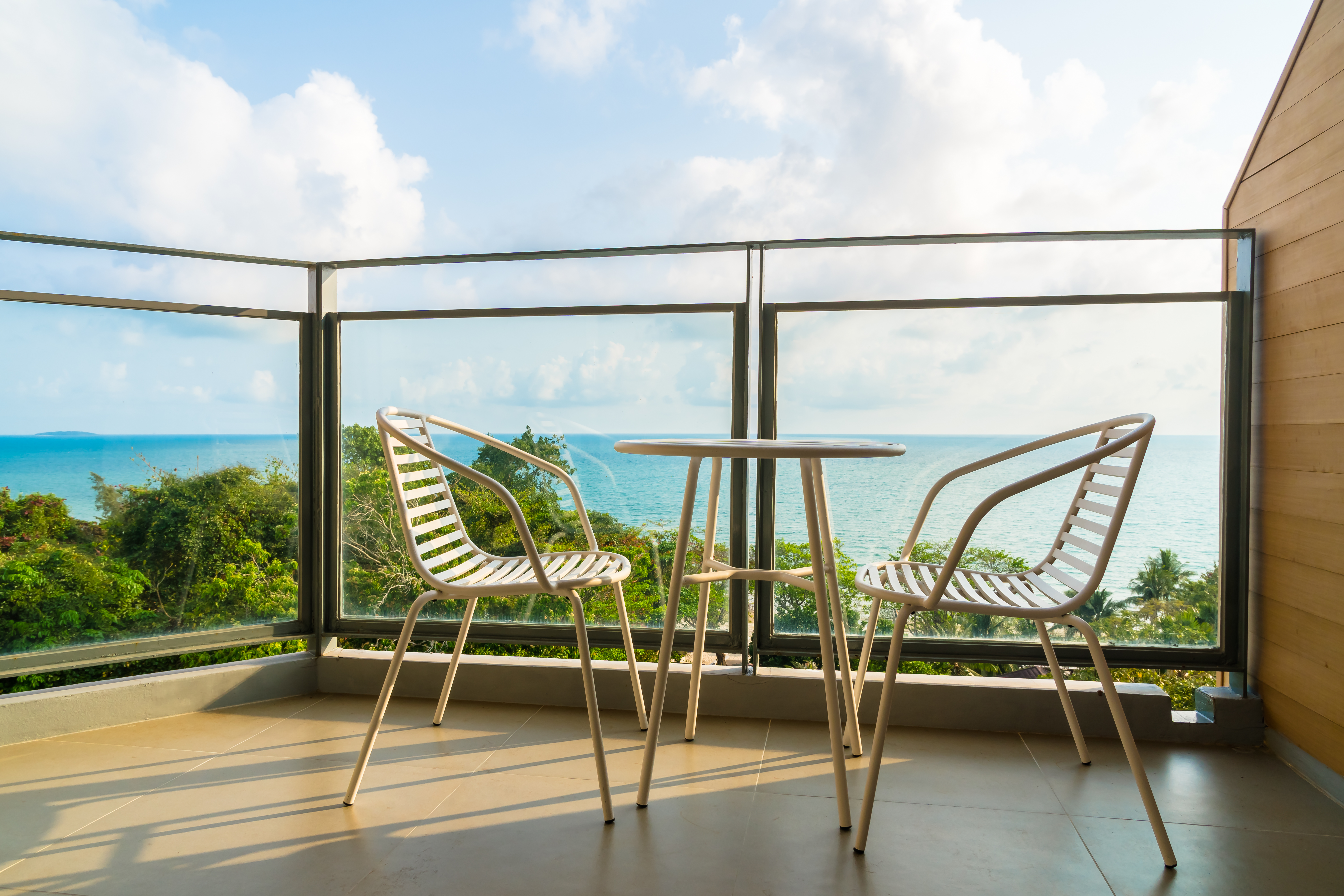
Where Sea Air Meets Structural Steel
In the coastal stretches of Cape Town, buildings live in a constant conversation with the Atlantic winds. It is a conversation that is not always kind. Salt-laden air drifts inland like an invisible abrasive, settling upon steel railings, balcony fixings, anchor bolts, and concrete edges. Over time, this quiet intrusion becomes a structural concern of no small consequence.
Balconies and railings, while often admired for their architectural charm and sea-facing appeal, carry a responsibility that extends far beyond aesthetics. They are load-bearing safety systems. When they fail, they do not do so privately. They fail in public view, with public consequences.
This article examines the critical role of balcony and railing safety inspections in coastal buildings across Cape Town, with particular attention to how corrosion undermines load-bearing joints and why the implications extend directly into public safety.
The Coastal Environment as a Structural Stressor
Cape Town’s coastal climate introduces a unique combination of moisture, salt, and wind-driven particulates that accelerate material degradation in ways inland environments rarely experience.
Steel components exposed to sea air undergo a process of electrochemical deterioration. Salt acts as an electrolyte, intensifying oxidation. Concrete, while often perceived as inert and permanent, is porous. Chlorides penetrate its surface, reaching embedded reinforcement steel and triggering corrosion from within.
Once corrosion begins in reinforcement or connection points, expansion occurs. This expansion creates internal pressure within concrete, often leading to cracking, spalling, and progressive weakening of structural interfaces.
Balconies and railings are especially vulnerable because they are exposed on multiple sides, frequently unprotected by deep overhangs or adequate waterproofing detailing.
Why Balconies and Railings Are High-Risk Structural Elements
Balconies are cantilevered or semi-supported extensions of a building’s main structure. This means they rely heavily on a limited number of critical load-bearing connections. Railings, while seemingly lighter in function, are safety-critical barriers designed to prevent falls from height.
The risk lies not in their appearance, but in their connection points.
Corrosion tends to concentrate in:
- Anchor bolts embedded in concrete slabs
- Welded joints between steel balusters and frames
- Base plates where water accumulates
- Hidden fixings beneath tiles or façade finishes
When these points weaken, the system does not degrade evenly. It fails at its weakest link.
A railing may appear visually intact while already suffering from severe internal corrosion at its base. Likewise, a balcony slab may show only minor cracking on the surface while reinforcement steel inside is actively deteriorating.
Corrosion and the Silent Breakdown of Load-Bearing Joints
Corrosion in coastal buildings is not a surface-level inconvenience. It is a structural transformation.
At load-bearing joints, steel is expected to transfer forces safely between components. These joints depend on tight tolerances, material integrity, and stable anchorage. When corrosion sets in, steel loses cross-sectional area, reducing its ability to carry load.
More critically, corrosion products occupy more volume than the original steel. This expansion exerts outward pressure on surrounding concrete or joint housings.
In balcony systems, this leads to:
- Micro-fractures around anchor points
- Progressive loosening of fixings
- Reduced friction between connected components
- Sudden brittle failure under dynamic load
Wind loading on coastal balconies can be significant. Railings, in particular, experience repeated cyclical stress from wind pressure and human interaction. A weakened joint that might otherwise survive static conditions becomes vulnerable under motion.
The Public Safety Dimension of Structural Deterioration
Unlike internal building systems, balcony and railing failures do not remain hidden. They occur at the boundary between private property and public space.
A falling railing section or partial balcony collapse introduces immediate risk to:
- Residents and guests using the balcony
- Pedestrians passing below
- Maintenance workers and inspectors
- Adjacent properties exposed to debris fall zones
Cape Town’s urban coastal zones often feature high-density apartment living. Buildings in Sea Point, Green Point, Camps Bay, and parts of the Atlantic Seaboard frequently have stacked balconies with shared exposure lines. In such environments, a single failure can propagate risk vertically and horizontally.
The consequences are not limited to structural damage. Legal liability, insurance complications, and municipal compliance issues often follow swiftly after such incidents.
Public safety, in this context, is not an abstract concern. It is a direct outcome of maintenance discipline.
Early Visual Indicators of Corrosion in Coastal Balconies
While corrosion often progresses internally, there are outward signs that experienced inspectors and maintenance teams are trained to identify.
These may include:
- Rust staining along concrete edges or railing joints
- Hairline cracks radiating from anchor points
- Flaking or bubbling paint on metal railings
- White salt deposits on concrete surfaces
- Slight movement or vibration in railing structures under pressure
In Cape Town’s coastal districts, these signs tend to appear earlier than in inland environments due to persistent salt exposure and wind-driven moisture cycles.
Even subtle discoloration at a railing base can indicate deeper structural compromise beneath the surface layer.
Hidden Risks Beneath Finishes and Waterproofing Layers
One of the most deceptive aspects of balcony deterioration is its ability to hide beneath seemingly intact finishes.
Tiles, screeds, and waterproofing membranes often conceal the early stages of corrosion. Water ingress may occur through micro-cracks or failed sealant joints, slowly reaching embedded steel or anchor points.
Once moisture is trapped beneath a finish layer, evaporation is limited. This creates a persistent damp environment that accelerates corrosion.
Common hidden failure zones include:
- Balcony edges beneath tile skirting
- Drainage outlets where waterproofing meets pipe penetrations
- Expansion joints between structural segments
- Junctions between balcony slabs and external façade walls
Without targeted inspection methods, such as moisture scanning or partial exposure checks, these issues remain undetected until structural symptoms become visible.
Inspection Protocols in Coastal Building Maintenance
Effective balcony and railing inspections in coastal Cape Town require a layered approach that combines visual assessment with structural evaluation.
A typical inspection focuses on three primary dimensions:
Structural integrity assessment
This includes checking load-bearing capacity, joint stability, and deflection under pressure. Inspectors may apply controlled force to railings to test movement or looseness.
Material condition evaluation
Steel components are examined for corrosion depth, not just surface rust. Concrete is assessed for cracking patterns, spalling, and moisture penetration.
Connection and anchorage review
Anchor bolts, weld points, and base plates are scrutinised for signs of fatigue, corrosion, or displacement.
In high-risk coastal zones, inspections are ideally scheduled at shorter intervals due to accelerated environmental wear.
The Role of Preventative Maintenance in Structural Longevity
Preventative maintenance is often misunderstood as cosmetic upkeep. In coastal construction, it is fundamentally structural protection.
Timely interventions can significantly extend the lifespan of balcony and railing systems. Protective coatings, sealant renewal, and corrosion inhibitors act as barriers between steel and salt exposure.
Key preventative actions include:
- Reapplication of marine-grade protective coatings
- Sealing of cracks and expansion joints
- Replacement of corroded fasteners before structural failure
- Installation of improved drainage detailing to prevent water pooling
These measures reduce the rate of deterioration, but they do not eliminate the need for inspection. Maintenance and inspection must operate in tandem.
Case Patterns Observed in Coastal Cape Town Buildings
Across coastal Cape Town, building maintenance professionals frequently encounter recurring failure patterns.
Older apartment blocks often exhibit corrosion at balcony reinforcement points due to outdated waterproofing systems. Newer developments, while structurally advanced, sometimes suffer from design oversights in drainage detailing or material compatibility.
A common pattern involves railing systems that appear structurally sound but are compromised at their base plates due to prolonged water exposure. Another frequent issue is balcony edge spalling caused by chloride ingress into reinforcement steel.
These patterns are not isolated incidents. They represent systemic responses to a shared environmental condition.
Environmental Acceleration and Material Fatigue
Materials used in construction are designed with predictable lifespan assumptions. However, coastal environments introduce accelerated fatigue cycles.
Daily temperature fluctuations, combined with humidity and salt exposure, create expansion and contraction stresses. Over time, this leads to micro-movement within joints and materials.
Steel fatigues under repeated stress cycles, while concrete loses cohesion when reinforcement corrosion expands internally. The combination produces a compounding deterioration effect.
Balconies and railings, as exposed structural elements, experience this cycle more intensely than most other building components.
Human Interaction and Load Variability
Structural systems are designed not only for static loads but also for dynamic human interaction.
Railings are frequently leaned upon, pushed against, or used for support during movement. Balconies accommodate groups of people, furniture, and occasional overloading during social gatherings.
When corrosion has already weakened joints, these everyday interactions become stress tests. What would normally be a minor force becomes a triggering event.
This is where public safety implications become most apparent. Failure does not require extreme conditions. It often occurs during ordinary use.
Regulatory and Compliance Considerations in Cape Town
Building maintenance in Cape Town is governed by safety regulations that place responsibility on property owners and managers to ensure structural integrity.
Balcony and railing systems fall under critical safety components due to their fall-prevention function. Failure to maintain these systems can result in compliance breaches, legal liability, and enforcement action following inspections or incidents.
Municipal authorities and structural engineers often require documentation of inspection schedules, maintenance interventions, and repair records, particularly in multi-unit residential buildings.
Compliance is not merely administrative. It is a framework designed to reduce preventable risk.
The Financial Implications of Delayed Inspection
Deferred maintenance in coastal environments carries compounding financial consequences.
What begins as minor corrosion treatment may escalate into full structural repair if left unaddressed. Replacement of balcony reinforcement or railing systems is significantly more costly than early-stage intervention.
Additional costs may include:
- Emergency structural stabilisation
- Temporary evacuation or restricted access
- Legal liability claims following incidents
- Insurance premium increases or coverage disputes
In this sense, inspection is not an expense. It is risk control.
The Ethical Responsibility of Structural Stewardship
Beyond technical and financial considerations lies a quieter but essential responsibility.
Buildings in coastal Cape Town are not isolated entities. They are part of shared public environments. Balconies extend into airspace used by pedestrians. Railings define safety boundaries between private and public zones.
Maintaining these structures is an act of stewardship. Neglect does not remain contained within property lines. It extends into communal risk.
Safety Held in the Hands of Detail
Balcony and railing systems may appear modest within the broader architecture of a building, yet they carry a disproportionate responsibility for human safety.
In coastal Cape Town, where salt, wind, and moisture continuously challenge structural materials, corrosion becomes more than a maintenance concern. It becomes a progressive force acting on the integrity of load-bearing joints.
Regular inspection, timely maintenance, and careful attention to early warning signs form the foundation of public safety in these environments.
When these systems are properly cared for, they remain what they are meant to be: silent guardians at the edge of height, holding firm between structure and open air.