Lifecycle Stages of Coastal Roof Systems Explained
Classification
Commercial Maintenance
Timestamp
June 2026
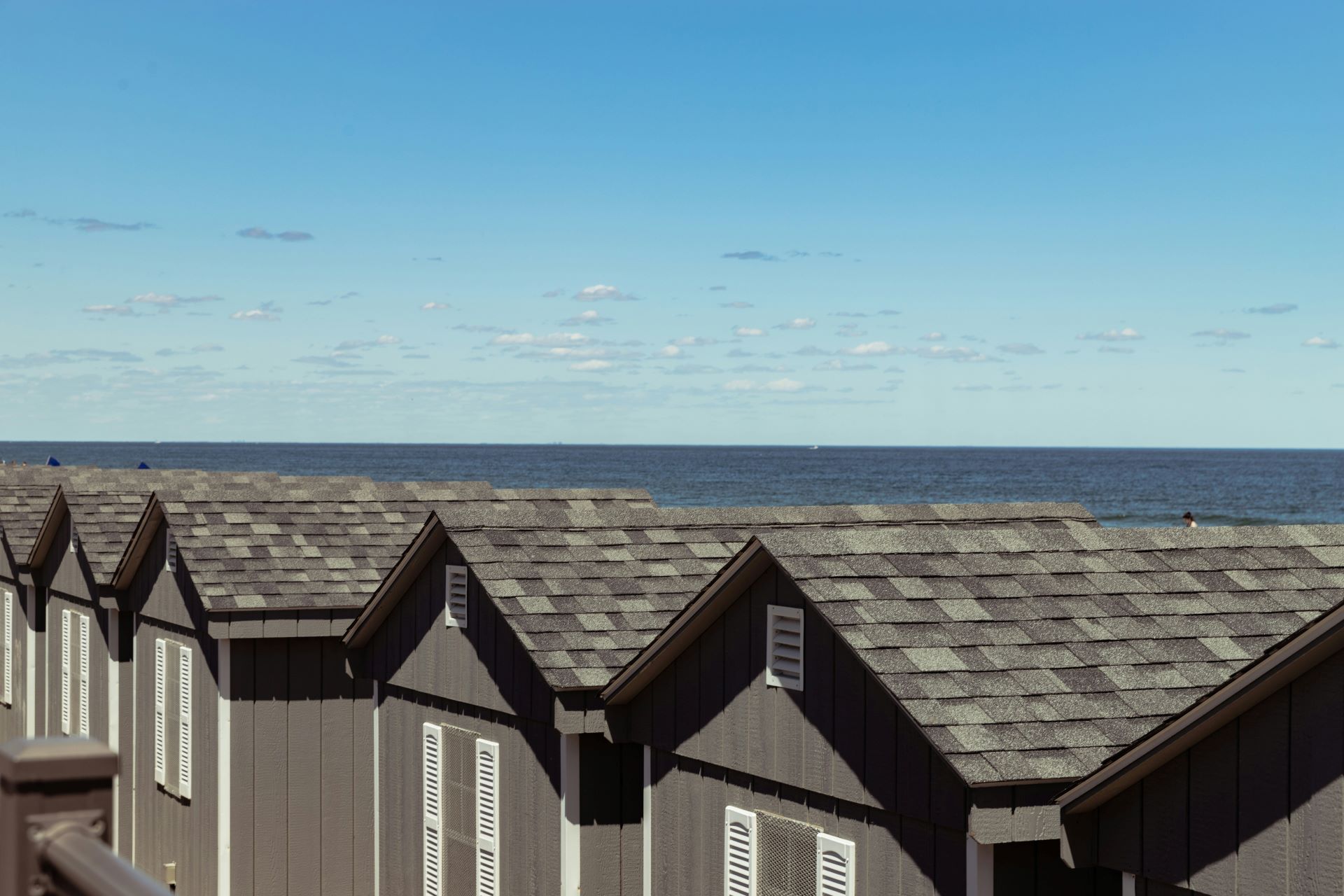
The Quiet Clock Above Cape Town
In Cape Town, the roof is never still.
It breathes salt air from the Atlantic, drinks in winter rain rolling off Table Mountain, and bakes under a summer sun that feels almost metallic. Unlike inland structures, coastal roofing systems do not simply “age” over time. They evolve through predictable stages of stress, fatigue, and failure shaped by a harsh marine climate.
Understanding this lifecycle is not an academic exercise. It is the difference between scheduled maintenance and catastrophic water ingress, between a controlled repair cycle and a cascading structural failure that spreads into ceilings, insulation, and load-bearing elements.
Coastal roofing systems, especially in Cape Town’s exposed suburbs like Sea Point, Hout Bay, and Bloubergstrand, degrade in measurable stages. Each stage presents visible signals, but only to those who know when to look.
The Coastal Environment as a Constant Stress Engine
Before examining the lifecycle itself, it is important to understand what drives it.
Cape Town’s coastal climate introduces three persistent stressors that interact continuously with roofing systems:
Salt-laden air carried inland by prevailing winds deposits microscopic chlorides on metal, tile, and sealant surfaces. Over time, these salts accelerate electrochemical corrosion, particularly in fasteners and flashing points.
High humidity cycles, especially during winter rainfall seasons, trap moisture in roofing assemblies. Even small imperfections in waterproofing membranes become entry points for long-term saturation.
UV intensity, often underestimated due to the city’s temperate reputation, steadily breaks down coatings, membranes, and polymer-based sealants. This creates a slow erosion of protective layers even before visible damage appears.
Together, these forces create a roofing environment where deterioration is not episodic but continuous.
Stage One: Installation and Latent Exposure
The lifecycle begins not with failure, but with quiet exposure.
A newly installed roof in Cape Town coastal zones appears pristine, yet from the first day it is subjected to salt deposition and wind-driven micro-abrasion. The quality of materials and installation workmanship determines how long this stage remains stable.
During this period, protective coatings and galvanised layers perform their primary function: delaying corrosion initiation. Flashings, screws, and ridge caps remain structurally sound, though microscopic chemical interactions have already begun.
This stage is often deceptive. There are no visible symptoms, yet the foundation for future deterioration is already being laid.
The critical intervention point here is specification, not repair. Stainless steel fixings, marine-grade coatings, and correctly detailed flashing systems determine whether the roof will transition into a 10-year or 25-year lifecycle curve.
Stage Two: Early Surface Fatigue and Micro-Damage
The second stage typically emerges between years two and six in coastal Cape Town conditions, depending on exposure level.
This is when the first visible signs of stress appear, though they are often dismissed as cosmetic.
Paint coatings begin to dull or chalk. Sealants around roof penetrations lose elasticity due to UV breakdown. In metal systems, early oxidation may appear around screw heads or cut edges where protective layers are weakest.
Tile roofs may show biological growth such as algae streaking, especially on shaded roof faces that retain moisture longer.
At this stage, damage is superficial but directional. It indicates that protective systems are no longer fully intact. Salt and moisture are now interacting directly with vulnerable substrate areas.
This is a critical inspection window. If maintenance is performed here, the roof can often be restored to near-original performance with minimal intervention.
If ignored, the system transitions into structural exposure.
Stage Three: Active Corrosion and Sealant Failure
Once early fatigue is left unchecked, coastal roofing systems enter a more aggressive degradation phase.
This stage is defined by the breakdown of protective barriers. Sealants begin to detach from substrates. Flashing joints lose watertight integrity. Fasteners become active corrosion points rather than passive anchors.
In Cape Town’s coastal belt, salt deposition accelerates electrochemical reactions in exposed metals. Rust spreads from isolated points into broader surface staining. Even aluminium components may show oxidation under persistent exposure conditions.
Water ingress becomes intermittent rather than constant. It may only appear during heavy winter rainfall or wind-driven storms, making it difficult to trace.
Internally, this stage often manifests as subtle ceiling staining, musty roof void conditions, or slight paint blistering near cornices.
The intervention point here is urgent maintenance. Targeted resealing, fastener replacement, and localized waterproofing can still prevent systemic failure. However, delay significantly increases repair complexity.
Stage Four: Structural Water Ingress and Compounding Damage
At this stage, the roof system is no longer failing in isolated areas. It is failing as an interconnected system.
Water ingress becomes persistent. Once moisture enters the roofing assembly, it begins migrating horizontally through insulation layers, timber structures, and ceiling voids. Cape Town’s winter rainfall accelerates this process dramatically.
Timber elements begin to absorb moisture repeatedly, leading to expansion, contraction, and eventual weakening of structural joints. Metal components within concealed areas may corrode unnoticed for extended periods.
What makes this stage particularly dangerous in coastal environments is the synergy between salt and moisture. Salt residues trapped within roofing layers continue to attract and retain moisture, prolonging drying cycles and accelerating decay.
Externally, symptoms become obvious. Staining spreads across ceilings. Paint begins to bubble. Roof lines may show slight deformation in severe cases.
Intervention here requires partial system reconstruction rather than simple repair. Sections of roofing may need replacement, not just restoration.
Stage Five: Systemic Failure and Material Breakdown
The final stage of the coastal roofing lifecycle is systemic failure.
This does not always mean collapse, but it does mean the roof can no longer perform its primary function without extensive reconstruction.
Fasteners may fail due to deep corrosion. Flashing systems lose structural integrity. Waterproofing membranes detach or fracture. In tiled systems, bedding mortar deteriorates to the point where tiles shift under wind load.
At this stage, repairs become reactive rather than preventive. Each intervention addresses symptoms rather than underlying system weakness.
In Cape Town’s coastal conditions, this stage is often reached earlier than inland expectations, particularly where low-grade materials were used or maintenance cycles were neglected.
Replacement planning becomes the most cost-effective strategy.
Inspection Timing: The True Control Mechanism
If the lifecycle describes how roofs degrade, inspection timing determines whether that degradation becomes manageable or destructive.
In coastal Cape Town environments, inspection frequency must be significantly higher than inland standards.
A twice-yearly inspection cycle is the practical baseline, ideally aligned with seasonal transitions. Post-winter assessments are especially critical, as this is when moisture-related damage becomes most visible.
Inspection focus should always prioritise:
Roof penetrations and sealant integrity, where most leaks originate.
Fasteners and flashings, where corrosion begins invisibly.
Drainage pathways, where blockages create localized water pooling.
Surface coatings, where early fatigue indicates deeper systemic stress.
The key principle is not complexity, but consistency. Regular observation prevents hidden deterioration from compounding into structural failure.
Intervention Points Across the Lifecycle
Each stage of the roofing lifecycle has a distinct intervention window.
Early fatigue stages allow for low-cost maintenance interventions such as resealing, cleaning, and protective coating renewal. These actions reset the degradation curve and extend system lifespan significantly.
Active corrosion stages require targeted replacement of compromised components. Fasteners, flashings, and localized waterproofing become priority areas.
Structural ingress stages demand partial reconstruction and system re-evaluation, often including insulation and timber replacement alongside roofing repairs.
Systemic failure requires full roof replacement planning, ideally with upgraded materials suited for marine exposure.
The cost difference between early and late intervention is exponential, not linear. A roof maintained in Stage Two conditions may cost a fraction of what Stage Four remediation requires.
Material Behaviour in Coastal Cape Town Conditions
Not all roofing materials respond equally to coastal stress.
Metal systems are highly efficient but vulnerable at connection points where dissimilar metals meet. Galvanic corrosion is a common failure driver if material compatibility is not carefully managed.
Tile systems offer thermal stability but rely heavily on underlayment integrity and mortar condition, both of which degrade under prolonged moisture exposure.
Modern composite systems and coated metal solutions tend to perform better in Cape Town’s coastal zones, provided maintenance schedules are respected.
However, no material is immune to lifecycle progression. The difference lies in rate of degradation, not its existence.
The Maintenance Philosophy That Extends Roof Lifespan
Coastal roofing systems are not static assets. They are dynamic structures requiring ongoing stewardship.
The most effective maintenance philosophy is not reactive repair, but scheduled interruption of the degradation cycle.
This means cleaning salt deposits before they concentrate, replacing sealants before they detach, and inspecting fasteners before corrosion becomes structural.
In Cape Town, where environmental exposure is constant, maintenance is not an optional extension of ownership. It is part of the roof’s operating system.
Reading the Roof Before It Fails
The lifecycle of a coastal roofing system is not random. It is patterned, predictable, and, most importantly, readable.
Every roof in Cape Town tells a story through small signals long before major failure occurs. The challenge is not the absence of warning signs, but the timing of interpretation.
Those who understand the rhythm of degradation do not experience sudden roof failure. They experience managed transitions between lifecycle stages.
In coastal construction, control does not come from stopping deterioration entirely. It comes from knowing exactly when to intervene.