Wind Stress Amplification in Cape Town High-Rises
Classification
Commercial Maintenance
Timestamp
June 2026
When Wind Becomes a Structural Force
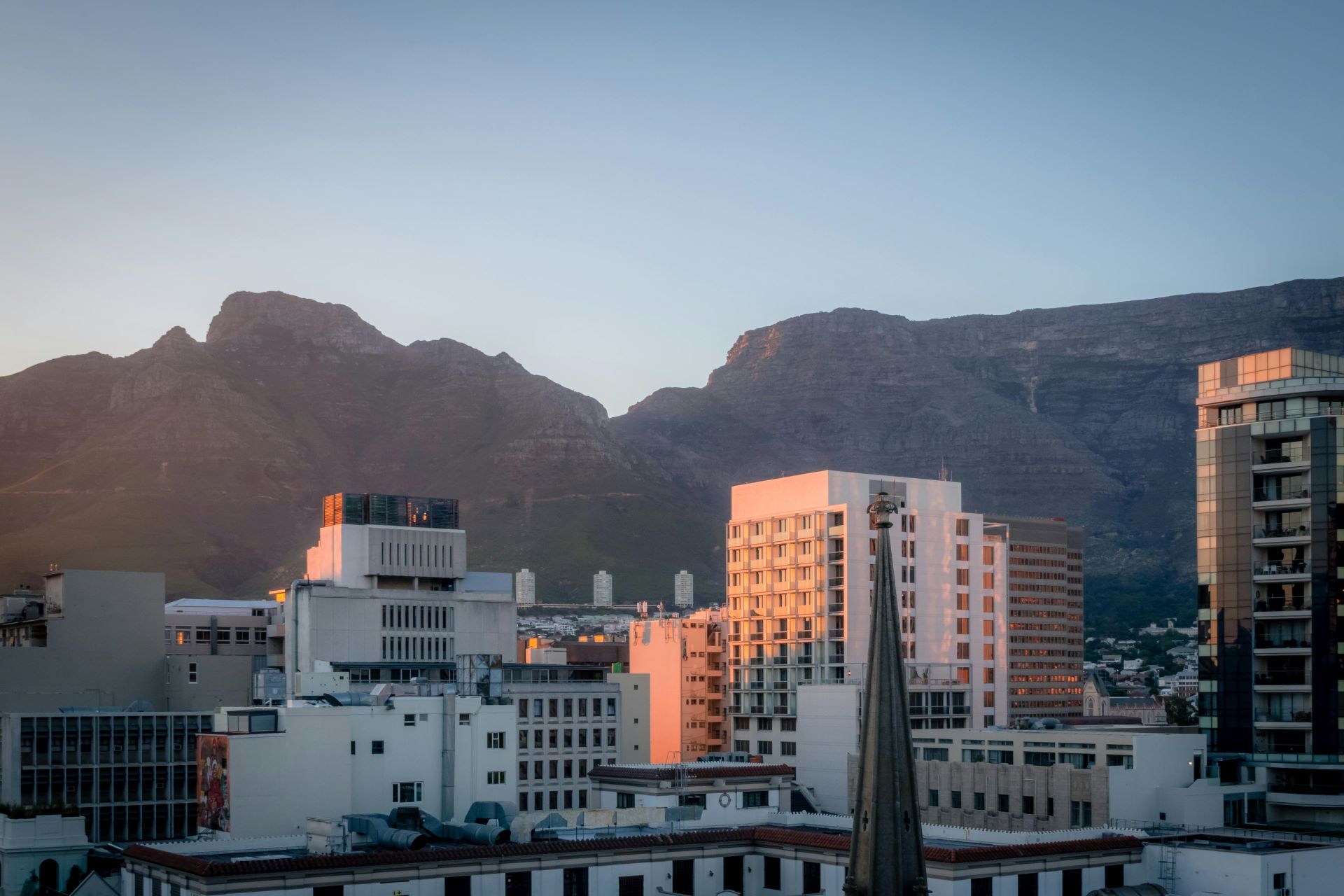
In Cape Town’s skyline, glass and concrete towers do more than reflect the Atlantic light. They stand inside a constantly shifting aerodynamic field where wind is not a uniform push, but a layered, accelerating force.
As buildings rise above the urban fabric, they enter a region where wind behaves less like a breeze and more like a structured flow system shaped by terrain, temperature gradients, and atmospheric pressure differences. The result is a pronounced increase in wind speed with height, which translates directly into amplified structural stress on high-rise buildings.
This phenomenon is not incidental. It is a core design consideration in modern construction and building maintenance across Cape Town’s coastal and CBD districts, where exposure to strong wind systems is a defining environmental condition.
The Vertical Acceleration of Wind Speed
Wind near the ground is slowed by friction. Buildings, vegetation, terrain roughness, and urban density all act as resistance layers, disrupting smooth airflow. This creates what engineers describe as a boundary layer: a zone where wind speed is suppressed and highly turbulent.
As height increases, that frictional influence decreases. Wind is freer to accelerate, and its velocity increases progressively with elevation. In simplified engineering terms, wind pressure increases with the square of wind speed, meaning even moderate increases in velocity can lead to significant increases in structural load.
:contentReference[oaicite:0]{index=0}
This relationship explains why a building’s upper floors often experience disproportionately higher wind forces than lower levels.
In Cape Town, this effect is intensified by coastal exposure and mountain-driven airflow patterns that funnel and accelerate wind through urban corridors.
Cape Town’s Unique Wind Environment
Cape Town sits at a dynamic atmospheric intersection between the South Atlantic High and the complex topography of the Cape Peninsula. This combination creates strong pressure gradients that drive persistent wind systems across the city.
When air moves from high-pressure to low-pressure zones, it accelerates through any available channel. In Cape Town, those channels are often defined by:
- Coastal edges where land meets ocean
- Urban canyons formed by dense high-rise clusters
- Mountain gaps and ridges that funnel airflow
Table Mountain and surrounding elevations play a particularly important role. As wind is forced around and over these structures, it is compressed and accelerated, creating localized zones of increased velocity on the leeward and lateral sides of the urban grid.
These effects are not uniform. They vary throughout the day depending on thermal heating, atmospheric stability, and seasonal wind systems such as the south-easterly flow commonly associated with the “Cape Doctor.”
Pressure Gradient Effects and Urban Acceleration
At the heart of wind amplification in high-rise environments lies the pressure gradient. Wind flows from regions of higher atmospheric pressure to lower pressure, and the steeper this gradient, the faster the airflow.
In dense urban environments like Cape Town’s CBD and Foreshore precinct, buildings themselves reshape these gradients. They act as both barriers and accelerators, forcing air to divert, compress, and re-accelerate between structures.
Research in urban wind engineering shows that interference between buildings can significantly alter wind pressure distributions on façades, often creating alternating zones of high and low pressure depending on wind direction and surrounding geometry. :contentReference[oaicite:1]{index=1}
This means that a high-rise does not simply “face the wind.” It interacts with a constantly evolving pressure field shaped by its neighbours, street alignments, and open spaces.
How Height Changes Wind Loading on Structures
As elevation increases, two critical changes occur simultaneously:
First, wind speed increases due to reduced surface friction and greater atmospheric stability. Second, turbulence characteristics shift, producing stronger gusts and more variable loading conditions.
Engineering studies show that wind pressure increases significantly with height, meaning upper floors may experience substantially higher loads than mid or lower levels of the same structure. :contentReference[oaicite:2]{index=2}
This vertical gradient has direct implications for:
- Curtain wall and façade anchoring systems
- Window glazing thickness and framing design
- Balcony and terrace structural detailing
- Rooftop mechanical plant stability
In Cape Town’s coastal high-rises, salt-laden winds add a further layer of complexity, accelerating material fatigue when combined with cyclical pressure fluctuations.
The Urban Canyon Effect in Cape Town
Between tall buildings, wind does not simply pass through; it is channelled, compressed, and often accelerated. This is known as the urban canyon effect.
In Cape Town’s CBD, where medium and high-rise structures line narrow streets, wind can behave almost like water through a channel. The tighter the spacing between buildings, the more pronounced the acceleration and turbulence.
This produces two key outcomes:
- Ground-level wind bursts that affect pedestrians and access points
- Increased façade pressure variability on mid-height sections of buildings
The result is a layered wind profile where different floors of the same building experience fundamentally different aerodynamic conditions.
Pressure Fluctuations and Structural Fatigue
Wind stress on high-rise buildings is not static. It fluctuates continuously due to turbulence, building interference, and shifting atmospheric conditions.
These fluctuations are particularly important because they introduce cyclic loading, which contributes to long-term material fatigue. Even if average wind speeds remain within design limits, repeated pressure variation can gradually degrade façade components, seals, and fixings.
Studies of high-rise wind behaviour show that pressure on building façades can alternate between positive and negative values in rapid cycles, especially on windward surfaces exposed to turbulent flow fields. :contentReference[oaicite:3]{index=3}
For Cape Town structures, this is especially relevant during seasonal wind events when strong gradients persist over extended periods.
Implications for Construction in Cape Town
Understanding wind amplification is essential during both design and maintenance phases of high-rise construction.
Key considerations include:
- Structural framing must accommodate increasing lateral loads with height
- Façade systems require wind-rated anchoring and flexible jointing
- Rooftop installations must be engineered for uplift and oscillation resistance
- Maintenance schedules should account for accelerated wear on wind-exposed components
In coastal environments like Cape Town, corrosion compounds wind stress effects, making protective coatings and material selection critical to long-term performance.
Modern building design increasingly integrates aerodynamic modelling, including wind tunnel testing and computational simulations, to predict how structures will behave under real atmospheric conditions.
The Role of Surrounding Buildings
High-rise structures rarely exist in isolation. Each new development modifies the wind field of its neighbours.
Surrounding buildings can either shield a structure from direct wind exposure or intensify local turbulence through interference effects. This interaction can significantly alter façade pressures and even reverse expected wind flow patterns in certain conditions.
In rapidly developing urban zones like Cape Town’s Foreshore and CBD extensions, this evolving skyline means wind loading conditions are never entirely fixed. They change as the city grows vertically and horizontally.
Designing for a Living Atmosphere
Wind in Cape Town is not a background condition. It is an active structural participant in the life of every high-rise building.
As height increases, wind speed rises, pressure gradients intensify, and urban geometry reshapes airflow into complex patterns of acceleration and turbulence. These effects combine to produce amplified wind stress that must be carefully accounted for in both design and maintenance.
High-rise buildings, in this sense, are not merely static objects. They are aerodynamic instruments embedded in a living atmospheric system, constantly negotiating forces that grow stronger with every metre upward.
Understanding this interaction is essential to ensuring that Cape Town’s skyline remains both resilient and responsive to the environment that shapes it.